How sad Anastasia beat everyone
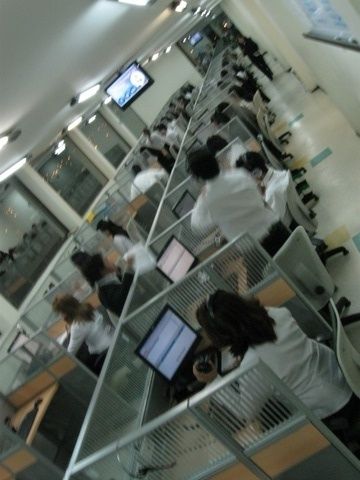
We recently ran a test comparing seven voice-synthesis options for a bot, from chipper and cheerful to depressed and fucking done with life. Spoiler! The gloomiest one won, and the team started calling that voice "Sad Anastasia".
Why? Simple: when a bot answers in a cheerful, upbeat voice, the user instantly knows it's a robot, because nobody in a call center talks like that. Everyone there is usually very tired and unhappy with life.
This fits neatly into a narrative I first heard from my dorm roommate from Magnitogorsk. He loved it and repeated it often: "Daniel, Russia is simply for the sad. You wouldn't understand." A convenient, insulting narrative that I really don't want to believe.
So let's look at the situation from another angle:
1/ External motivation: the stick, KPIs, fines for deviating from the script. All of it systematically correlates with defensive aggression and poor mental health, which means great people show up to the job, and this is what the system does to them.
2/ And it's definitely not about Russia, it's about the industry as a whole. US call centers run a churn rate around 35%, roughly double the average for other operational roles, and in some states it's over 100%. Heh :)
The conclusion is simple: "Russia is for the sad" isn't about Russians, it's about how service work is set up. And it can be set up differently!
Zappos, an online shoe retailer, built its call center from day one on inverting every standard practice in the industry. Let me walk you through it:
1/ After onboarding, before the actual work starts, everyone gets an offer: take $4,000 and leave, or stay and start the job. If you feel call-center work isn't your thing, you take the money and simply walk away. About 3% do.
2/ They also have no scripts, no KPIs on call duration, no call monitoring or quality control. The instruction is basically one line: solve the customer's problem, do it the way you think is right.
3/ The operators themselves, by the way, are called customer loyalty managers.
The result: 11-20% turnover against the industry's 30-45%. 75% of revenue comes from repeat purchases. Revenue growth from $8M to $1B in 8 years. In the end Amazon bought the guys in 2009 for $1.2B and copied the motivation program for its fulfillment centers.
Really glad that at T-Bank we obsess over this too and keep proving that great service moves customer LTV and retention. We're actively experimenting with positive motivation for call-center operators.
I believe that in a couple of years the same voice experiment will give a different result :)
Stay tuned
🥷🥷🥷